Tag Archives: benchmarks

Chuwi MiniBook X vs MacBook Neo: The $399 Laptop That Refuses to Throttle
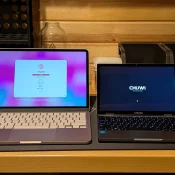
Disclosure: I purchased this Chuwi MiniBook X with my own money (~$399 from Amazon). See also: my MacBook Neo review and full Neo benchmark analysis. The $399 Laptop That Refuses to Throttle In my MacBook Neo review, I wrote that after 60 seconds of sustained CPU load, the Neo “drops to phone-class performance that a $400 Windows laptop can match.” A reader could reasonably wonder: does a $400 Windows laptop actually deliver? I had a Chuwi MiniBook X on hand
Every Apple CPU Compared: M1 Through M5 Max (All Variants)

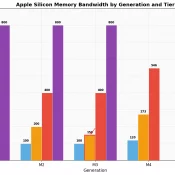
TL;DR: this page is meant to list every Apple Silicon chip from the M1 through the M5 Max, including all the lower-spec binned variants Apple buries in the fine print, with verified specs, practical buying advice, and a dedicated section on which chips can actually run local AI models. Inspired by the popular r/mac comparison table, expanded with official Apple sources, all binned variants, and honest flagging of estimated values. Bookmark it. I will keep it updated. The M5 Max

I Tested 13 Local LLMs on Tool Calling: March 2026

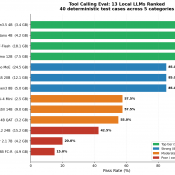
I built a deterministic eval harness and tested 13 local LLMs on tool calling (function calling) to find out which models work decently well for agentic tasks. The result that surprised me most: a 3.4 GB model scored higher than everything else I tested, including models five times its size. If you’re running a local AI stack with Open WebUI, LM Studio, or any OpenAI-compatible frontend, tool calling is one of the key features that enables agentic behavior. It lets

Dell XPS 13 SSD upgrade to 512GB [2015]

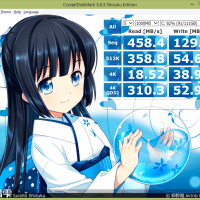
2015/07 UPDATE: for my Dell XPS 13 (2015 infinity display) I completed the 512GB SSD upgrade about 4 months ago and I highly recommend the upgrade! Here are the new performance numbers: ———————————————————————– CrystalDiskMark 3.0.3 Shizuku Edition x64 (C) 2007-2013 hiyohiyo Crystal Dew World : http://crystalmark.info/ ———————————————————————– * MB/s = 1,000,000 byte/s [SATA/300 = 300,000,000 byte/s] Sequential Read : 481.072 MB/s Sequential Write : 436.664 MB/s Random Read 512KB : 329.971 MB/s Random Write 512KB : 392.295 MB/s Random Read 4KB (QD=1) :

Duke Nukem Forever game benchmarks (FPS)

There are only two computer games that I play these days: StarCraft 2 and Duke Nukem Forever. Both of which are sequels to venerable classics. StarCraft 2 is widely considered a worthy successor to SC1. Duke Nukem Forever is generally not considered to be worthy compared to it’s older counterpart Duke Nukem 3D. However, they are both surprisingly fun to play in multiplayer for exactly the opposite reasons: StarCraft 2 – one of the ultimate games when it comes to skill, it