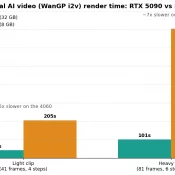
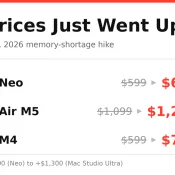
MacBook Neo Deep Dive: Benchmarks, Wafer Economics, and the 8GB Gamble

Preface: I’m not really a Mac guy. But I have deep respect for what Apple has done with their silicon, and I’ve been following their CPU journey since the Motorola 68k days through PowerPC, the Intel transition, and now their in-house Apple Silicon. What they’ve accomplished in the last five years is genuinely remarkable. Apple is one of the few original tech companies that has survived and thrived over the decades while still staying in the consumer tech space. As

Claude Code /context Command: See Exactly Where Your Tokens Go

TL;DR: Type /context in Claude Code to see a full breakdown of where your context window tokens are being spent. It shows system overhead, MCP tools, memory files, conversation history, and free space. Use it to find bloated MCP servers, oversized CLAUDE.md files, and know when to run /compact. What Is /context? If you’ve ever had a Claude Code session start strong and then slowly degrade, the context window is probably the reason. Every message you send carries invisible overhead:

Claude Reached Its Tool-Use Limit for This Turn: What It Means and How to Fix It

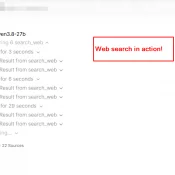
TL;DR: This message means Claude hit its per-turn cap on tool calls (around 10-20 actions like web searches, file reads, or connected service requests). Click “Continue” and it picks up right where it left off. No work is lost. 👍 What Does “Claude Reached Its Tool-Use Limit” Mean? If you use Claude with any connected tools (Gmail, Google Drive, web search, MCP servers, code execution, etc.) you may have seen this banner pop up mid-conversation: “Claude reached its tool-use limit

Welcome to the ride!

Guest Post by Jack

Hello! I will be putting up a website for guns, games, dirtbikes, and all sorts of other cool stuff! It is not up yet but it will be up within a few days. I am very excited because I will be able to share my knowledge and hopefully help people learn more about their stuff. The website’s name is jackhodges.com Please drop ideas on what you want to see on my website in the comments!

Claude Session Handoffs: How to Keep Context Across Conversations

TLDR: AI conversations have a pretty definite length limit as of 2026 and a limited shelf life. When context fills up or you start a new session, everything the AI learned about your project may be gone. ⭐ A simple two-file system (a permanent reference doc and a living session log) plus a handoff prompt takes a few seconds at the end of a session and saves minutes of re-explanation (and potentially wasted context) at the start of the next

I Tested 13 Local LLMs on Tool Calling: March 2026

I built a deterministic eval harness and tested 13 local LLMs on tool calling (function calling) to find out which models work decently well for agentic tasks. The result that surprised me most: a 3.4 GB model scored higher than everything else I tested, including models five times its size. If you’re running a local AI stack with Open WebUI, LM Studio, or any OpenAI-compatible frontend, tool calling is one of the key features that enables agentic behavior. It lets

How to Make a Post Sticky in WordPress (Pin to Front Page)

If you want to pin a blog post to the top of your WordPress front page so it always shows up first (regardless of when it was published), WordPress has a built-in feature for that called “sticky posts.” Here’s how to do it and a few things worth knowing. ⚡ TL;DR Go to Posts > All Posts, hover over the post you want to pin, click Quick Edit, check “Make this post sticky”, and click Update. That’s it. The post

How to Drag Files into Claude Code in VS Code (Paste with Context)

TL;DR: In the Claude Code VS Code extension, hold Shift while dragging a file from the Explorer panel into the Claude Code prompt box. This attaches the file as context so Claude can read and reference it directly. Without Shift, VS Code just opens the file in a new tab. Hold Shift and drag a file into the prompt. The “Hold Shift while dragging to drop files into Claude Code” tooltip confirms you’re doing it right. What Is Paste with

How to Change Claude Code Effort Levels in VS Code (/effort)

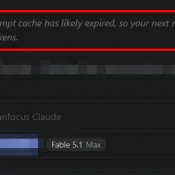
TL;DR: In the Claude Code VS Code extension, type /effort in the prompt box and press Enter to cycle through four reasoning levels: Low, Medium, High, and Max. Each level controls how deeply Claude thinks, how many tool calls it makes, and how many tokens it burns. On Windows, it’s just /effort, Enter, done. The effort level picker in Claude Code for VS Code. This shows Max with all four dots lit up. What Are Effort Levels? Effort levels control

« Older Entries