Who Reads This Blog? Traffic Breakdown by OS

Who’s reading this blog, and what are they running? I pulled month of site visitor stats to find out. The Breakdown Here’s the operating system split across all visitors over the last month or so: Operating System Users Share Windows 12,292 53.6% iOS 3,846 16.8% macOS 3,732 16.3% Android 1,919 8.4% Linux 420 1.8% Chrome OS 53 0.2% Other / Unknown 677 2.9% Total: 22,939 users over 90 days. Windows Still Dominates, But Apple is a Third of the Audience

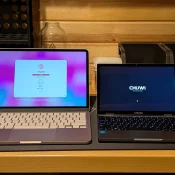
Can MacBook Neo Run Claude Code?

So in updating my MacBook Neo review with some additional stress testing and thermal testing, I came across some interesting results that begged the question: “Can it run Claude?” If you’re a gamer, that probably triggers the old “Can it run Crysis?” reflex. For those who don’t remember (or weren’t there), Crysis was the 2007 PC game that became the de facto hardware torture test. If your rig could run Crysis, it could run anything. It was a rite of

I Asked Claude What Hardware It Wanted. It Told Me.

NoteTL;DR Summary: After buying the 32GB / 1TB Minisforum MS-01 from Newegg for $1,016.58 on February 8, 2026 and running it off-grid on solar in rural Missouri, I think it is one of the best Proxmox setups you can build if you care about low idle power, serious networking, and headless management. It has been rock solid and my trusty little box idles around 13W-35W while running Home Assistant, a solar poller, SearXNG, and Open WebUI. For current pricing Check

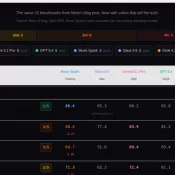
Claude vs ChatGPT vs Gemini for Coding: Testing Results

TL;DR: I ran the same 5 coding tasks through Claude Opus 4.6, OpenAI Codex CLI (gpt-5.3-codex), Google Gemini 2.5 Flash (sorry I did not have easy access to the newer models, but Gemma 4 was tested!), and two open-source models I ran locally: Gemma 4 31B and Qwen 3.5 35B. Claude’s code was the most production ready. Codex and Qwen tied for best code reviewer. Gemini was the cheapest. The open-source models scored A-, closing in on the paid tier.

Claude Code /buddy How to Preview, Hatch, and Reroll Your Terminal Pet

TL;DR: Claude Code v2.1.89 added /buddy, a virtual pet companion in your terminal. Your buddy’s body is deterministically generated from your account, and the personality generates permanently the first time you hatch it. Preview yours first with npx any-buddy current, but install Bun before you do (if you don’t already have it) Is This an April Fools Joke? I first noticed /buddy the least trustworthy way possible, by seeing it appear in Claude Code’s slash-command autocomplete on April 1. 😜

Claude code source code analysis

Source Archive Summary and Risk Analysis via ChatGPT 5.4 Thinking: Prepared from the src/ tree only. This version intentionally omits the file-by-file appendix and instead highlights what is structurally important, surprising, or concerning.   Scope analyzed: 1,902 files total, primarily TypeScript/TSX (.ts: 1,332; .tsx: 552). Largest areas: utils/ (564), components/ (389), commands/ (207), tools/ (184), services/ (130), hooks/ (104), ink/ (96). Overall impression: this is not a simple UI application. It is a full agentic CLI/runtime with shell execution, permission

Codex CLI + Claude Code: MCP Is 4x Faster Than the Command Line

TL;DR: OpenAI’s Codex CLI works best with Claude Code when you invoke it through MCP, not the command line. MCP calls return in about 3 seconds versus 13+ seconds for CLI on my dev environment, it avoids sandbox issues entirely, and keep everything inside your conversation. Here’s briefly how I set it up, tested various invocation methods, and landed on an optimized dual-AI workflow that works for my coding and research tasks. Why Codex When Claude Code Already Works? Claude

How to Allocate VRAM on AMD Strix Halo for LLMs and AI Workloads

If you have a Ryzen AI Max+ 395 (Strix Halo) system with 128GB of RAM and you’re wondering why your local LLM host (be it LM Studio, Ollama, or whatever) can’t see most of that memory, this is the fix. AMD’s unified memory architecture means your CPU and GPU share the same physical RAM, but Windows needs to be told how much of it the GPU is allowed to use. By default, it’s VERY conservative. More info below and how

« Older Entries Recent Entries »