What Oil Should You Run in a Willys CJ-2A? (The Go-Devil Guide)
My son recently picked up a 1946 Willys CJ-2A, and naturally one of the first questions out of the gate was: What oil should I use?
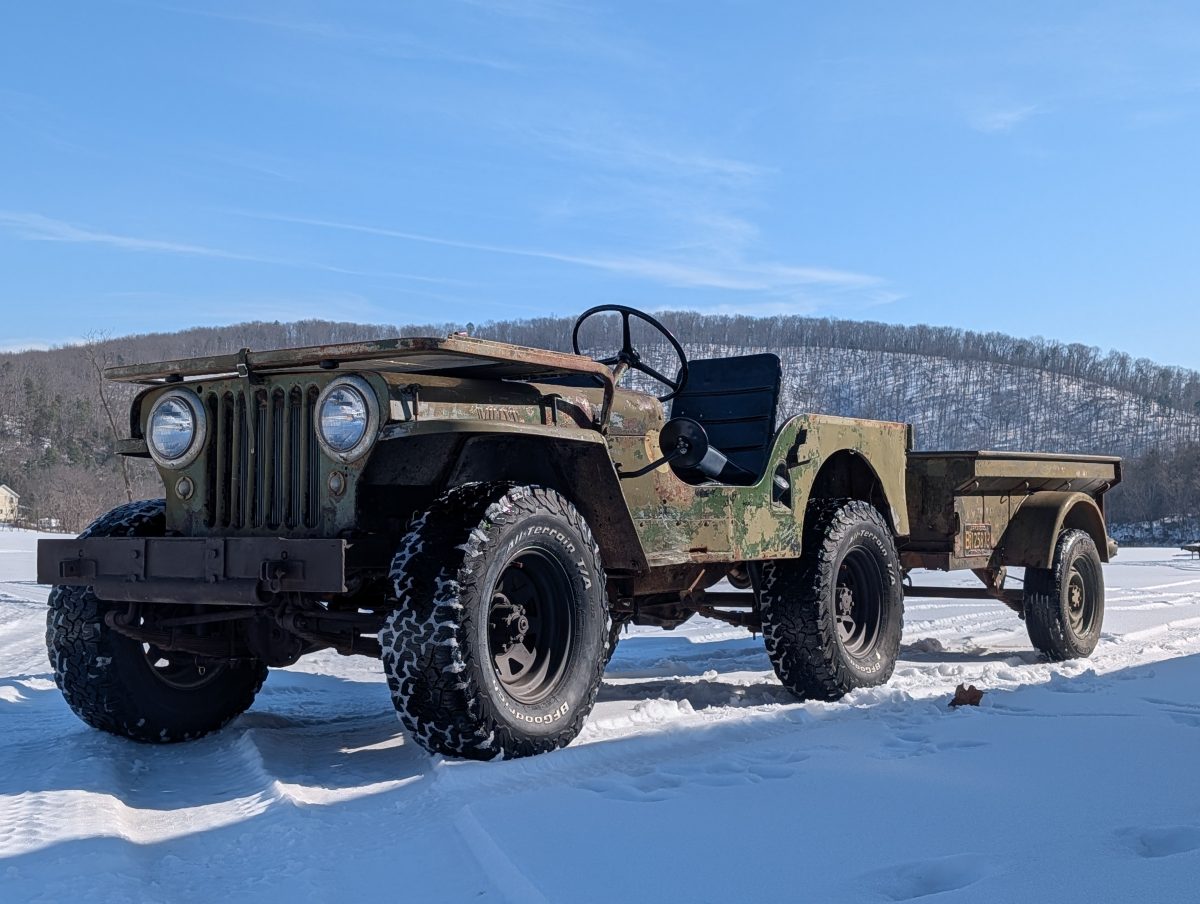
Simple question, right? Not so fast. The internet will give you 47 different opinions, two forum arguments, and a guy who swears by bacon grease. So I did the research, dug through the forums, checked the original Willys service manual specs, and put together the definitive guide so you don’t have to.
⚠️ Disclaimer: Be aware, this advice is worth what you paid for it (nothing!) and always check with your local Jeep community or mechanic first, but hopefully this will give you some fuel (or oil?) for thought!
The Short Answer
Use a high-ZDDP (zinc) oil in 10W-30 for most climates. The best off-the-shelf options are:
| Oil | Weight | Why It Works |
|---|---|---|
| Valvoline VR1 Racing | 10W-30 | High ZDDP, purpose-built for flat-tappet engines. The gold standard. |
| PennGrade 1 (Brad Penn) | 10W-30 | Another favorite among flathead guys. Very high zinc content. |
| Shell Rotella T4 | 15W-40 | Diesel oil with good ZDDP levels. Cheap and everywhere. Dual-rated for gas engines. |
Any of these will treat your Go-Devil right. If you can only find one brand at your local parts store, go Rotella T4 and don’t lose sleep over it.
Why Zinc (ZDDP) Matters So Much
Here’s the deal. The L-134 “Go-Devil” engine is a flathead with flat-tappet lifters. Unlike modern engines with roller lifters, the cam lobes and lifter faces in your CJ-2A are in direct sliding metal-on-metal contact. ZDDP (Zinc Dialkyldithiophosphate) creates a sacrificial protective layer on those surfaces.
The problem? Modern passenger car oils (API SN, SP, etc.) have been steadily reducing zinc content since the early 2000s to protect catalytic converters in modern vehicles. Your 1946 Jeep doesn’t have a catalytic converter. It doesn’t care about emissions compliance. It cares about zinc.
If you grab a random jug of “whatever’s on sale” 10W-30 off the shelf at Walmart, you’re likely getting an oil with inadequate zinc levels for a flat-tappet engine. Over time, this accelerates cam and lifter wear. Not good.
Rule of thumb: If the oil isn’t specifically marketed for classic/flat-tappet engines, racing use, or diesel applications, it probably doesn’t have enough zinc for your Go-Devil.
What About Diesel Oil? (The Rotella Debate)
Shell Rotella T4 15W-40 is probably the single most popular oil recommendation on every CJ-2A forum. And it’s a solid choice! It’s affordable, available at every auto parts store and farm supply shop, and it carries higher ZDDP content than standard passenger car oils.
However, there’s a nuance the forums don’t always mention: diesel-rated oils also carry higher detergent levels. On a gasoline engine, excessive detergent can cause oil foaming at higher RPMs, which can momentarily starve bearings of lubrication.
In practice, Rotella T4 is dual-rated (it carries both diesel CI-4 and gasoline SM ratings), so Chevron and Shell have formulated it to work in both applications. Thousands of flathead guys run it without issue.
But if you want to eliminate the debate entirely? Go with Valvoline VR1 10W-30 or PennGrade 1. These are high-ZDDP oils formulated specifically for gasoline flat-tappet engines. No compromises, no asterisks.
The Original Willys Service Manual Specs
The factory service manual for the CJ-2A recommends oil weight based on ambient temperature:
| Ambient Temperature | Recommended Weight |
|---|---|
| Above 32°F (0°C) | SAE 30 or 10W-30 |
| 10°F to 32°F (-12°C to 0°C) | SAE 20 or 10W-30 |
| -10°F to 10°F (-23°C to -12°C) | SAE 10W or 10W-30 |
| Below -10°F (-23°C) | SAE 5W |
You’ll notice 10W-30 covers nearly the entire range. That’s why it’s the go-to recommendation for most owners. If you’re running your Jeep hard in summer heat or doing heavy trail work, bumping up to 15W-40 or straight SAE 30 is perfectly fine.
The Bypass Oil Filter: Why Change Intervals Matter More Than Brand
Here’s something critical that a lot of new CJ-2A owners don’t realize: your Jeep does NOT have a full-flow oil filtration system.
Modern vehicles push all of the oil through a filter before it reaches the engine bearings. Your CJ-2A uses a bypass filter that only filters a small portion of the oil flow at any given time. The filtered oil dumps back into the sump, and the process repeats. It’s more of a slow “polishing” system than a true filtration system.
What does this mean practically? Your oil change intervals need to be much shorter than a modern vehicle:
| Oil Type | Change Interval |
|---|---|
| Detergent oil (modern) | Every 2,000–3,000 miles |
| Non-detergent oil (old school) | Every 1,000–1,500 miles |
The oil brand you choose matters far less than staying on top of those intervals. With a bypass filter, contaminants accumulate in the oil much faster than in a modern full-flow system. Cheap oil changed frequently will always beat expensive oil that sits too long.
Detergent vs. Non-Detergent: The Sludge Question ⚠️
If you just bought a CJ-2A that hasn’t been rebuilt recently (or possibly ever), be careful about your first oil choice.
Older engines that have been running non-detergent oil for decades will have sludge deposits built up throughout the engine. These deposits are essentially “stable” — they’re not great, but they’re not actively causing problems either.
If you suddenly dump in a high-detergent modern oil, it can break that sludge loose all at once. Chunks of dissolved sludge can then clog oil passages, block the bypass filter, and cause oil starvation. Bad news.
The safe approach for an unknown engine:
- If the engine has been recently rebuilt or you know it’s been running detergent oil → use modern detergent oil (any of the recommended oils above).
- If the engine is original/unknown history and might be full of sludge → start with a non-detergent 30W oil for a couple of short-interval changes (500-1,000 miles each) to gently flush things, then transition to a modern detergent oil with ZDDP.
- If the engine is known clean → go straight to Valvoline VR1 or PennGrade 1 and enjoy.
Quick Reference: The Cheat Sheet
| Scenario | Oil | Notes |
|---|---|---|
| Best overall | Valvoline VR1 10W-30 | High ZDDP, gasoline-rated, widely available |
| Budget pick | Shell Rotella T4 15W-40 | Affordable, dual-rated, every farm store has it |
| Premium pick | PennGrade 1 10W-30 | Top zinc content, classic car favorite |
| Hot summer / heavy use | 15W-40 or straight SAE 30 | Per the original Willys manual |
| Cold winter starts | 10W-30 or 5W-30 | Helps the 6-volt starter do its job |
| Unknown sludgy engine | Non-detergent 30W (temporary) | Transition to detergent oil after a few changes |
ZDDP Supplement: The Backup Plan
If you can’t find any of the oils above and you’re stuck with a standard 10W-30 from the shelf, you can add a ZDDP supplement to bring the zinc levels up. A few popular options:
- Rislone Zinc Engine Oil Supplement — available at O’Reilly, about $13 for a 32oz bottle
- Comp Cams Zinc Plus — popular in the hot rod world
- Lucas Zinc Additive — available at most auto parts stores
Follow the dosing on the bottle. More is not better — overdosing zinc can actually become corrosive to bearings.
Bottom Line
The Go-Devil L-134 is a beautifully simple engine that’ll run forever if you treat it right. The recipe isn’t complicated:
- Use oil with high zinc (ZDDP) content
- Change it every 2,000–3,000 miles (because bypass filter)
- Match the weight to your climate (10W-30 covers 90% of situations)
- Don’t dump detergent oil into a sludge-mystery engine without a transition plan
Get those four things right and your flat-four will probably outlast all of us. 💪
Got tips, corrections, or a strong opinion about oil brands? Drop a comment below! I’m always learning and I am definitely not the last word on this 😄